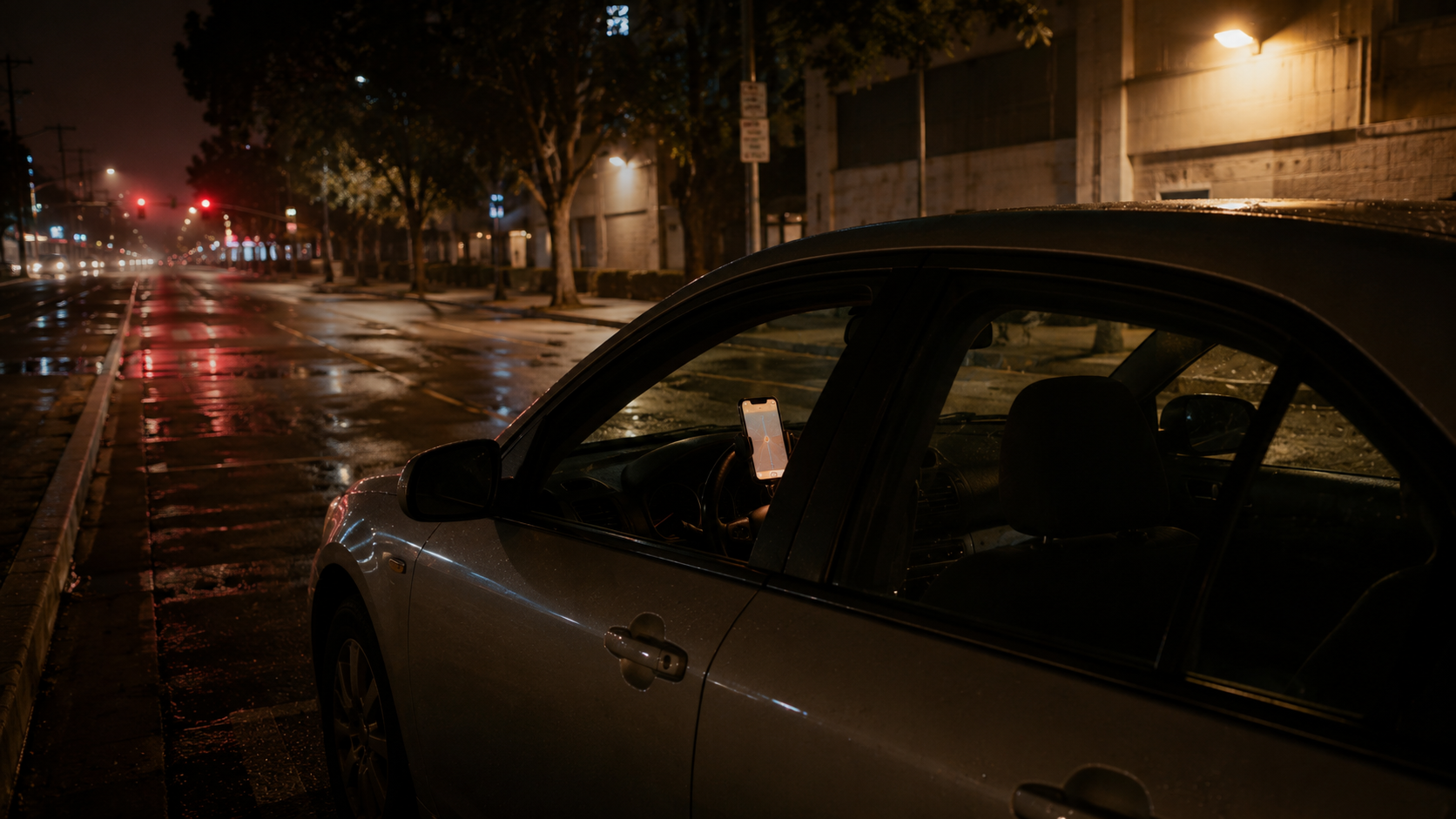







When you book an Uber Black, you expect more than an ordinary rideshare experience.
You’re paying for a luxury vehicle, a professional driver, and a higher standard of service. Naturally, you might assume that a premium ride also comes with greater protection if something goes wrong.
But in California, that assumption could cost you.
What many passengers don’t realize is that Uber Black drivers can operate under different insurance regulations than standard Uber drivers.
And those differences can mean something surprising:
You could pay significantly more for an Uber Black ride while traveling in a vehicle with a lower minimum liability insurance requirement.
Here’s what every California passenger should know.
THE $1 MILLION INSURANCE REQUIREMENT
Under California Public Utilities Code § 5433, transportation network companies such as Uber must maintain primary liability insurance of at least $1 million from the moment a participating rideshare driver accepts a ride request until the trip is completed.
This insurance is intended to provide financial protection for covered injuries, deaths, and property damage resulting from accidents.
For passengers seriously injured in a collision, the amount of available liability insurance can become critically important.
Medical expenses, lost income, ongoing rehabilitation, and other damages can quickly exceed hundreds of thousands of dollars.
But here’s where things get complicated.
Not every vehicle operating through the Uber platform is subject to the same insurance requirements.
THE UBER BLACK EXCEPTION
Uber Black operates differently from traditional rideshare services.
Uber Black drivers generally must meet commercial licensing and insurance requirements.
Rather than relying on the standard rideshare insurance maintained through Uber, commercially licensed drivers are required to maintain their own commercial automobile insurance.
Under California Public Utilities Commission regulations, certain commercial passenger carriers operating vehicles with seating capacity for seven passengers or fewer may carry a minimum of $750,000 in liability insurance.
Compare that with the $1 million minimum generally required for standard Uber rideshare trips.
Standard Uber ride: $1,000,000
Qualifying commercial Uber Black vehicle: $750,000
That’s a difference of $250,000 in required liability coverage.
The distinction is important: $750,000 is a regulatory minimum for qualifying commercial carriers, not necessarily the actual coverage carried by every Uber Black driver. Some commercial operators maintain higher limits.
Nevertheless, the law can permit a lower minimum than passengers might reasonably expect from a premium transportation service.
WHY DOES UBER BLACK HAVE DIFFERENT INSURANCE REQUIREMENTS?
The answer comes down to how California regulates different types of passenger transportation.
Standard rideshare drivers generally operate under transportation network company regulations.
Commercially licensed transportation providers, including certain Uber Black operators, may instead operate under regulations governing charter-party carriers.
These commercial transportation businesses are subject to their own licensing, permitting, and insurance requirements.
Because of that regulatory distinction, the $1 million rideshare liability insurance requirement does not necessarily apply to trips performed by commercially licensed Uber Black drivers.
Uber also explains that its standard rideshare liability policies do not cover trips performed by drivers operating under its commercial-driver framework.
Instead, those drivers must maintain their own qualifying commercial automobile insurance.
The result? Two passengers can book rides through the same app but travel under different insurance arrangements.
And the passenger paying more is not necessarily the one with greater insurance protection.
WHAT HAPPENS IF YOU’RE INJURED IN AN UBER BLACK ACCIDENT?
Imagine you’re riding in an Uber Black when another vehicle causes a serious collision.
You suffer significant injuries requiring surgery, rehabilitation, and time away from work.
Your damages may include:
- Emergency medical treatment and hospitalization
- Future medical expenses
- Lost wages and reduced earning capacity
- Physical pain and emotional suffering
- Long-term disability or permanent impairment
Now imagine the available insurance coverage is insufficient to compensate you fully.
Depending on the circumstances, recovering additional compensation could require identifying other responsible parties, investigating additional insurance policies, or pursuing further legal action.
The insurance available after an Uber Black accident may depend on several factors, including the driver’s commercial policy, the circumstances of the collision, and whether other parties share responsibility.
The price of your ride does not determine the amount of compensation available after an accident.
DOES THIS MEAN UBER BLACK IS UNSAFE?
Not necessarily.
Uber Black drivers must satisfy additional commercial requirements, and some may carry insurance coverage substantially higher than the regulatory minimum.
The issue is not whether Uber Black vehicles or drivers are inherently less safe.
The issue is the difference between what passengers expect and what the law actually requires.
A premium vehicle, professional driver, and higher fare do not automatically guarantee a higher liability insurance limit.
That distinction can become especially important after a serious accident.
WHAT SHOULD YOU DO AFTER AN UBER BLACK ACCIDENT?
If you’re injured while riding in an Uber Black, taking the right steps early can help protect your ability to pursue compensation.
1. Seek medical attention.
Your health should always come first. Some injuries may not become immediately apparent after a collision.
2. Preserve your trip information.
Save screenshots of your Uber trip receipt, driver information, vehicle details, and any communications related to the ride.
3. Document the accident.
If possible, obtain photographs, witness information, and the police report number.
4. Identify the applicable insurance coverage.
Do not assume that the standard $1 million Uber rideshare liability policy applies to your accident.
5. Understand your rights before accepting a settlement.
An early settlement offer may not account for future medical expenses, lost earning capacity, or long-term injuries.
Consulting an attorney can help you better understand the available coverage and the potential value of your claim.
THE BOTTOM LINE: LUXURY DOESN’T GUARANTEE PROTECTION
Uber Black promises a premium transportation experience.
But premium service does not necessarily mean premium insurance protection.
In California, qualifying commercially operated Uber Black vehicles may be subject to a $750,000 minimum liability insurance requirement, compared with the $1 million minimum generally required for standard rideshare trips.
That difference could matter significantly after a serious collision.
Before assuming that paying more means you’re better protected, understand the insurance rules behind your ride.