






The other driver fled.
You're standing on the side of the road, or in a parking lot, or at the corner of an intersection — and the person who hit you is already gone. Your hands are shaking. Your phone is in your pocket. And you're trying to figure out what you're supposed to do next.
This is the protocol.
The next hour, the next day, and the next week of decisions you make will determine whether your claim succeeds or fails. Insurance companies — especially your own insurance carrier under your uninsured motorist (UM/UIM) coverage — are already preparing to fight you. The decisions you make right now, before any attorney is involved, will either build your case or quietly hand it to them.
You don't need to know the law. You need to know what to do
The first hour
The first hour is about safety, evidence, and not making mistakes that can't be undone.
1. Do Not Chase The Other Driver
We understand the instinct. Adrenaline screams to follow them, photograph their license plate, take some kind of action. Don't.
Chasing makes you a moving target, takes you away from the scene, and puts you at risk of a second collision. Worse, it can hurt your legal claim — insurers later argue that your "pursuit driving" contributed to your damages. Stay put.
2. Call 911 - Immediately
Call 911 even if you feel "fine." Especially if you feel fine.
Three things happen when you call:
- A police officer is dispatched to take a report (you'll need this report number later)
- Paramedics can evaluate you on scene (concussions and soft-tissue injuries often don't surface for 24-72 hours)
- The 911 call itself becomes time-stamped evidence
Tell the dispatcher: "I was just hit by a vehicle that fled the scene." Be specific. The dispatch recording can later become key evidence.
3. Move to Safety - Carefully
If your vehicle is drivable and you're blocking traffic, move to the shoulder or a nearby parking lot. If your vehicle is not drivable, stay inside with your hazard lights on until help arrives.
Do not stand in the roadway photographing the scene. Drivers slow to look at accidents — that's when secondary collisions happen.
4. Capture Everything You Remember About the Other Vehicle
While the memory is fresh, write down or voice-memo:
Color of the vehicle
Make and model (even if you're not sure — "looked like a Honda Civic, maybe silver" is more useful than nothing)
License plate — any digits or letters at all
Direction it fled (north on the 405, east on Sunset, into the gas station parking lot)
Time of impact
Distinctive features (broken taillight, bumper stickers, body damage that was already there, tinted windows, custom rims)
The driver if you saw them (gender, approximate age, clothing, anything)
- Color of the vehicle
- Make and model (even if you're not sure — "looked like a Honda Civic, maybe silver" is more useful than nothing)
- License plate — any digits or letters at all
- Direction it fled (north on the 405, east on Sunset, into the gas station parking lot)
- Time of impact
- Distinctive features (broken taillight, bumper stickers, body damage that was already there, tinted windows, custom rims)
- The driver if you saw them (gender, approximate age, clothing, anything)
A partial plate has solved more hit-and-run cases than you'd believe. So has "the back-left bumper was hanging by zip ties."
5. Photograph Everything
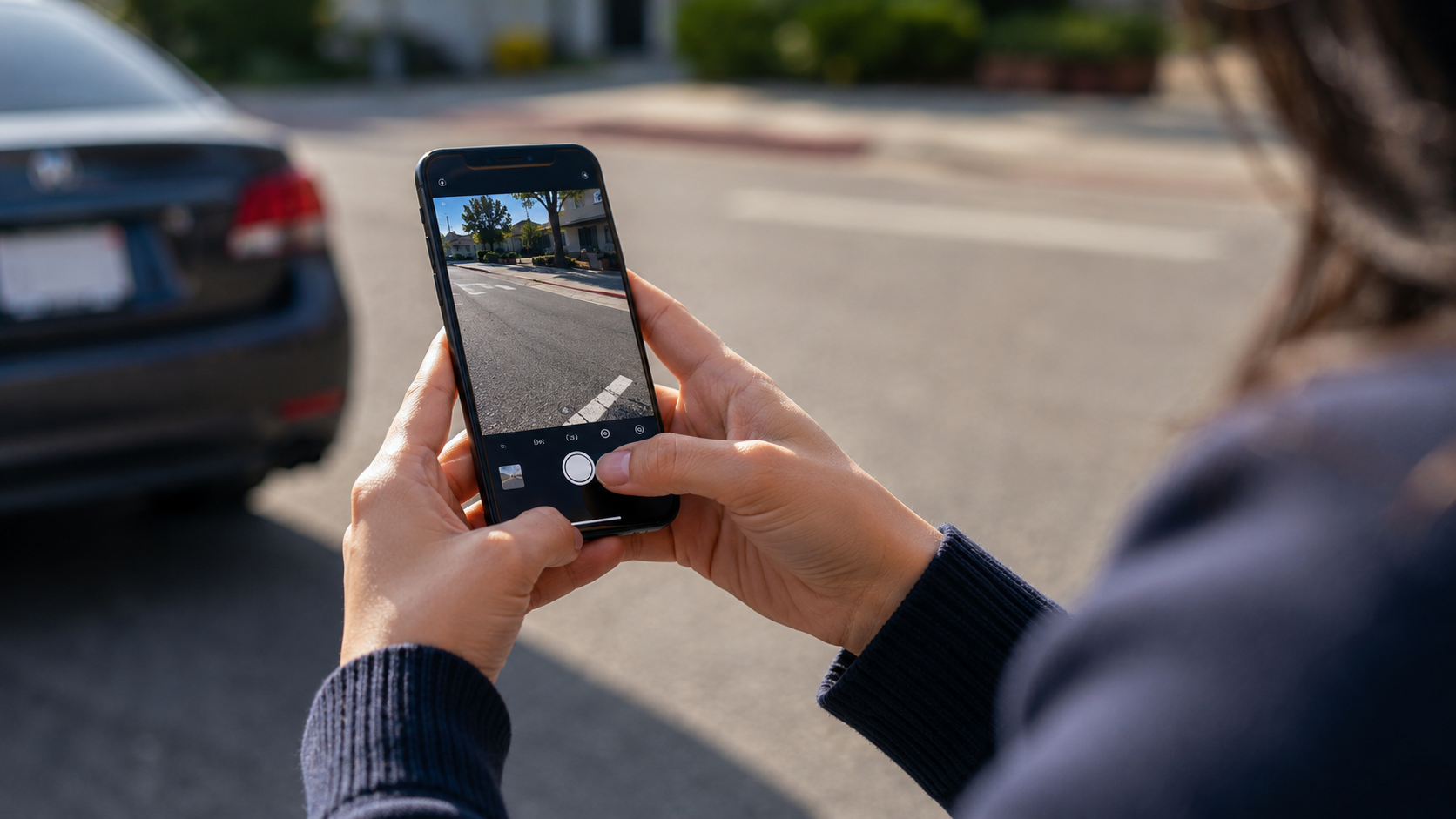
With your phone, take pictures of:
- Your vehicle from every angle (showing damage AND undamaged areas)
- The road and any skid marks, debris, or impact points
- Your injuries
- The intersection or location signs (street names, mile markers)
- Any cameras visible nearby (gas station cameras, ATMs, traffic cameras, doorbell cameras on nearby houses)
- Time-stamped photos are the gold standard. Phones do this automatically — don't worry about the timestamp, just shoot.
Time-stamped photos are the gold standard. Phones do this automatically — don't worry about the timestamp, just shoot.
6. Find Witnesses - Anyone, Anywhere
Walk the scene. Look in nearby cars, in storefronts, on sidewalks. Anyone who saw anything is a potential witness.
Get:
- Their full name
- Phone number
- A brief recording of what they saw (with their permission)
People scatter quickly after an incident. You have maybe ten minutes to find them before they're gone forever.
7. Get the Police Report Number
When the officer arrives, give them everything you've documented. Before you leave the scene, ask for the report number. Without it, retrieving the report later becomes a bureaucratic nightmare.
Some departments will hand you a card with the report number on it. Others will tell you to call the next business day. Either way — get the number before you drive away.
The first day
The next 24 hours are when most cases are lost — quietly, through phone calls and casual statements that insurers later weaponize.
1. See a Doctor - Even If You Feel Fine
Adrenaline masks injury. The most common hit-and-run injuries — whiplash, concussion, fractured ribs, soft-tissue trauma — often don't show symptoms for 24-72 hours.
If you wait until you "feel something," insurers will argue your injuries are unrelated to the accident. Same-day medical evaluation creates a documented timeline that ties your injuries to the incident.
Go to:
- Urgent care, or
- The ER, or
- Your primary care provider ( call ahead and explain it's accident-related)
Whatever the cost, this is the single most important decision of the first day.
2. Notify Your Insurance Carrier - But Be Strategic
You are required by your policy to report the accident. Most policies require notice within 24-72 hours, depending on the carrier. But how you report matters. Here's the script:
"I was involved in an accident today. The other driver fled the scene. I'm reporting this for the record. I'm not prepared to give a recorded statement at this time, and I am still gathering information. I will provide additional details after I've reviewed my policy and consulted with my doctor."
The stop talking.
Do not say:
- "I'm fine."
- "It wasn't that bad."
- "I don't think I'm injured."
- Or anything quantifying your damages, fault, or condition.
Anything you say will be on a recorded line. Anything you say can — and will — be used to reduce your settlement.
3. Open Your Claim File
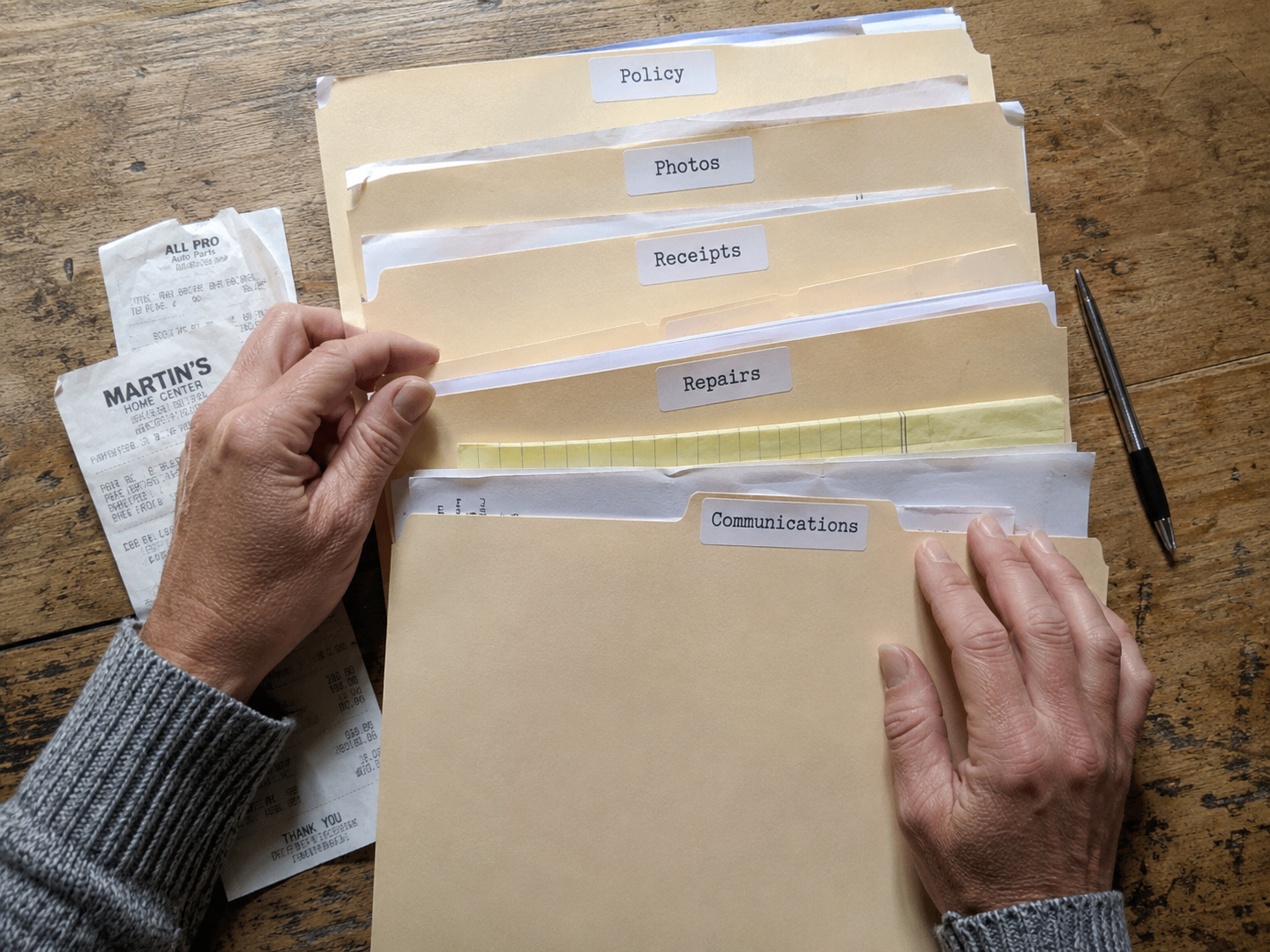
Get organized now. Start a folder (digital or physical) that contains:
- The police report number
- All your photos, named clearly ("Vehicle damage front bumper")
- A spreadsheet or document with: date, who you talked to, what was said, what was promised
- Every receipt — medical, vehicle repair quotes, transportation, parking, anything
- Pain journal entries (start today)
This will become your "evidence vault" — the documentation that defeats insurance bad faith later.
4. Do Not Give a Recorded Statement
This is the most important sentence in this article: do not give a recorded statement to any insurance company until you have spoken with an attorney.
Your own insurance carrier will request one within 24-72 hours. They will frame it as routine, helpful, "to process your claim faster." Every word you say will be transcribed and analyzed by a defense team whose job is to reduce your payout.
The right answer is: "I'd like to consult with an attorney before providing a recorded statement. I'll be back in touch."
You are within your legal rights to wait. They will not deny your claim for waiting.
the first week
When the officer arrives, give them everything you've documented. Before you leave the scene, ask for the report number. Without it, retrieving the report later becomes a bureaucratic nightmare.
Some departments will hand you a card with the report number on it. Others will tell you to call the next business day. Either way — get the number before you drive away.
1. Get the Police Report
Police reports take 5-10 business days to be finalized and released. Some departments require an online request; others want you to come in person.
Get a copy. Read it carefully. If anything is wrong — a misspelled name, a wrong direction of travel, a missing detail — you can request a correction. Inaccurate police reports come back to bite you in litigation.
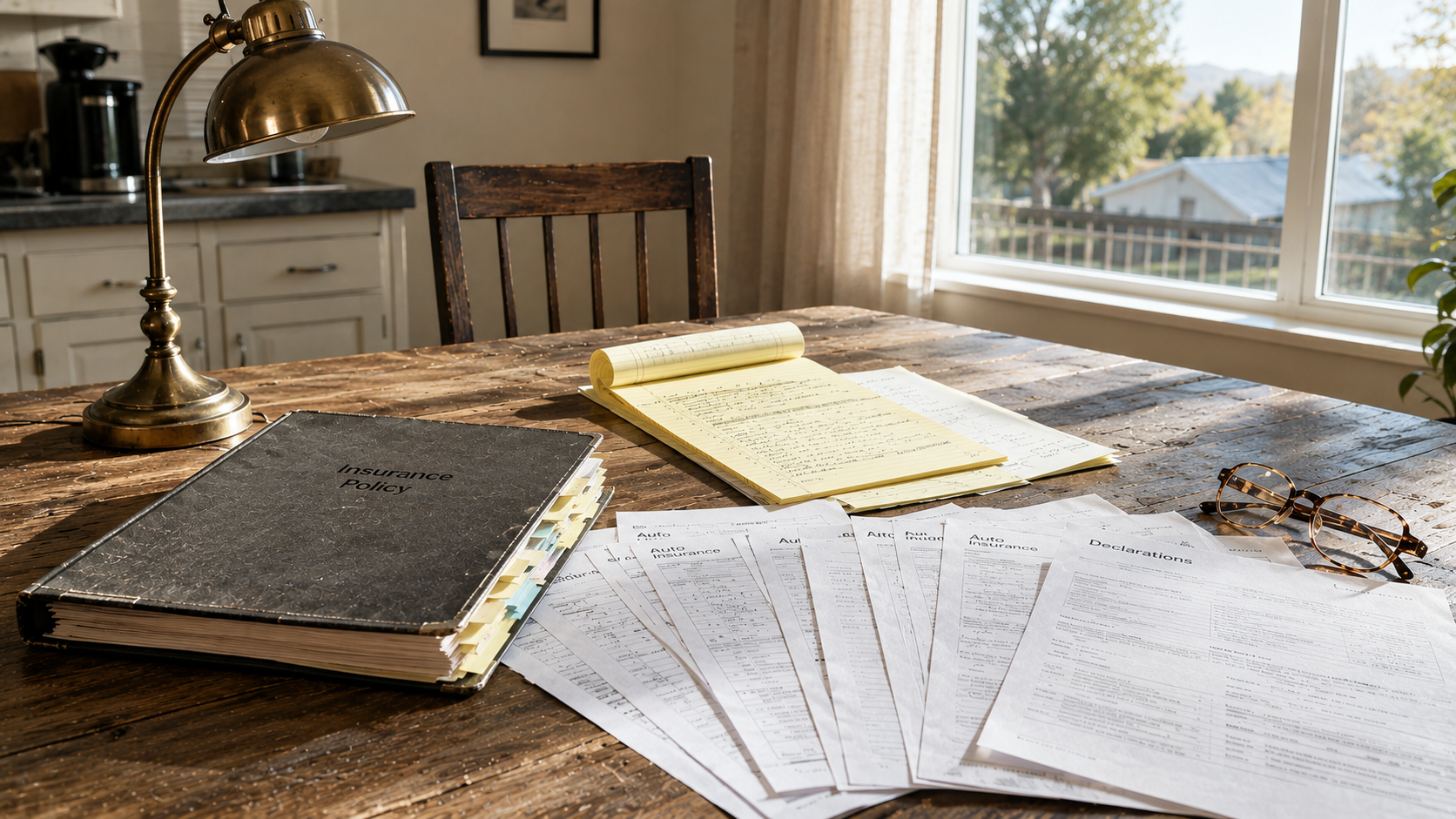
2. Get the Full "Policy Jacket" of Your Auto Insurance
Most people only have the declarations page ("dec page") — a one-page summary of coverage limits. That's not your policy. That's a marketing document.
Request the full policy jacket in writing. It can be 80-150 pages. It contains:
- The actual UM/UIM coverage definitions
- The conditions and exclusions
- The procedures for filing
- Your rights under your own policy
You cannot make informed decisions without the full document. Insurers count on you not asking.
3. Start Tracking Symptoms Daily
Whether you feel "fine" or not, start a daily log. One paragraph per day. Note:
- Pain levels (0-10) for any area that hurts
- Sleep quality
- Energy and focus during the day
- Any missed work, missed activities, missed the time with family
- Headaches, dizziness, memory issues, mood changes (TBI symptoms often emerge in week 2)
This log becomes one of the most powerful pieces of evidence in your case. Insurance defense attorneys cannot dispute documented daily symptoms — and juries respond strongly to consistent contemporaneous records.
4. Talk to an Attorney About Your UM/UIM Coverage
Here's the piece nobody tells you: in a hit-and-run, your own insurance company becomes your adversary.
Your uninsured motorist (UM) and underinsured motorist (UIM) coverage is what's supposed to step in when the at-fault driver can't be identified or doesn't have insurance. But your insurer's interest is to pay as little as possible — even though you're their customer.
A consultation with a personal injury attorney costs nothing. Most personal injury firms (ours included) work on contingency — no fees unless we win. There's no reason not to make the call.

.png)