







You're standing at the side of the road. Your hands are shaking. The other driver is shouting on the phone. A small crowd has stopped. And somewhere in the back of your mind, you know that what you do in the next hour will affect how much money you receive — and how much you don't — months from now.
This guide is what we tell every California car accident client to do, before any attorney is involved, before any claim is filed.
The insurance industry runs on one principle: pay you less than your case is worth. Their adjusters are trained, scripted, and rewarded for closing claims cheaply. Your only defense is documentation. The steps below are how you build that documentation in real time, so that months later — when their settlement offer arrives — you have the evidence to refuse it.
You don't need to know the law. You need to know what to do.
the first hour
The first hour is about safety, evidence, and not making mistakes that hand the case to the other side.
1. Stay at the Scene - Always
In California, leaving the scene of an accident can result in a hit-and-run charge, even if the accident wasn't your fault.
Pull over safely if your car is drivable. Turn on hazard lights. Stay until police and the other driver have exchanged information with you — or until police clear you to leave.
If the other driver flees: stay, document everything you remember about them, and call 911 immediately.
2. Call 911 - Even for "Minor" Accidents
Many drivers think they only need to call police for major collisions. That's wrong.
California Vehicle Code §20008 requires a police report for any accident with injury, death, or significant property damage. Even for fender-benders, calling 911 creates:
- A timestamped record of when you reported
- An on-scene officer who documents the scene naturally
- A police report number (you'll need this for every insurance interaction)
- Paramedics who can evaluate you on the spot
Adrenaline masks injury. Get evaluated even if you "feel fine."
3. Exchange Information - But Do Not Discuss Fault
When you talk to the other driver, exchange:
- Full name
- Phone number
- Driver's license number and insurance policy number
- License plate
- Vehicle make/model/color
- Photos of their insurance card and ID
DO NOT say:
- "I'm sorry"
- "It was my fault"
- '"I didn't see you"
- "I'm fine"
Even an apology in California can be twisted into an admission of fault. Stick to facts. Be civil. Be brief. Document and leave.
4. Photograph Everything
With your phone, capture:
- Damage to your vehicle from every angle
- Damage to the other vehicle from every angle
- The position of both vehicles before they're moved
- Skid marks, debris, broken glass
- Traffic signs, signals, road conditions
- Weather conditions
- Visible injuries
- License plates
- Insurance card and driver's license of the other driver
Phones timestamp photos automatically. This becomes critical evidence later when insurers argue the damage "wasn't really that bad."
5. Find Witnesses and Get Their Information
Walk the scene. Look for:
- Other drivers who stopped
- Pedestrians who saw the collision
- Workers in nearby businesses (gas stations, restaurants)
- Security or doorbell cameras nearby
Get each witness's full name, phone number, and a brief recording (with their permission) of what they saw.
Witnesses scatter within 10-15 minutes. After they leave, you may never find them aga
6. Get the Police Report Number Before You Leave
When the officer arrives, give them everything you've gathered. Before leaving:
- Confirm they are filing a report
- Get the report number in writing
- Confirm what police department is handling it (CHP, city PD, sheriff)
You'll need this number for your insurance, your attorney, and anyone else who touches the case.
7. Don't Sign Anything at the Scene
Insurance companies sometimes send adjusters to scenes for high-damage accidents. They may offer you papers to sign, or even cash on the spot. Decline politely:
"I appreciate it. I need to consult with someone before I sign anything."
Anything you sign at the scene almost certainly waives rights you don't yet know you have.
The first day
The next 24 hours are when the case is quietly won or lost — through phone calls and casual statements you don't realize are being weaponized.
1. See a Doctor - Within 24 hours
The single most important decision of the first day.
Adrenaline masks injury. The most common car accident injuries — whiplash, concussion, fractured ribs, soft-tissue trauma, herniated discs — often don't show symptoms for 24-72 hours. If you wait until you "feel something," insurers will argue your injuries are unrelated to the accident.
Same-day medical evaluation creates a documented timeline that ties your injuries to the incident. Go to urgent care, the ER, or your primary care provider (call ahead, explain it's accident-related).
Get every symptom documented in writing — even ones you think are minor.
2. Notify Your Insurance Carrier — Strategically
You're required by your policy to report the accident, usually within 24-72 hours. But how you report it matters more than people realize. Here's the script:
"I was in an accident today at [time] near [location]. I'm reporting this for the record. I'm still gathering information and haven't completed medical evaluation yet. I'm not prepared to give a recorded statement at this time, and I will provide details after consulting with my doctor and reviewing my policy."
Then stop talking.
DO NOT say:
- "I feel fine"
- "It wasn't that bad"
- I don't think I'm hurt"
- Anything quantifying your damages or condition.
Every word is recorded. Every casual phrase becomes ammunition for reducing your settlement.
3. Do Not Talk to the OTHER Driver's Insurance Company
The other driver's insurance adjuster will call you — sometimes within hours, often within a day. They will sound friendly. They will say they want to "help process your claim quickly."
They do not work for you. They work for the company trying to pay you less.
The right answer:
"I'm not prepared to discuss the accident at this time. I'm consulting with an attorney before any statements are made."
Then end the call. Anything you say to them is recorded and will be used against you.
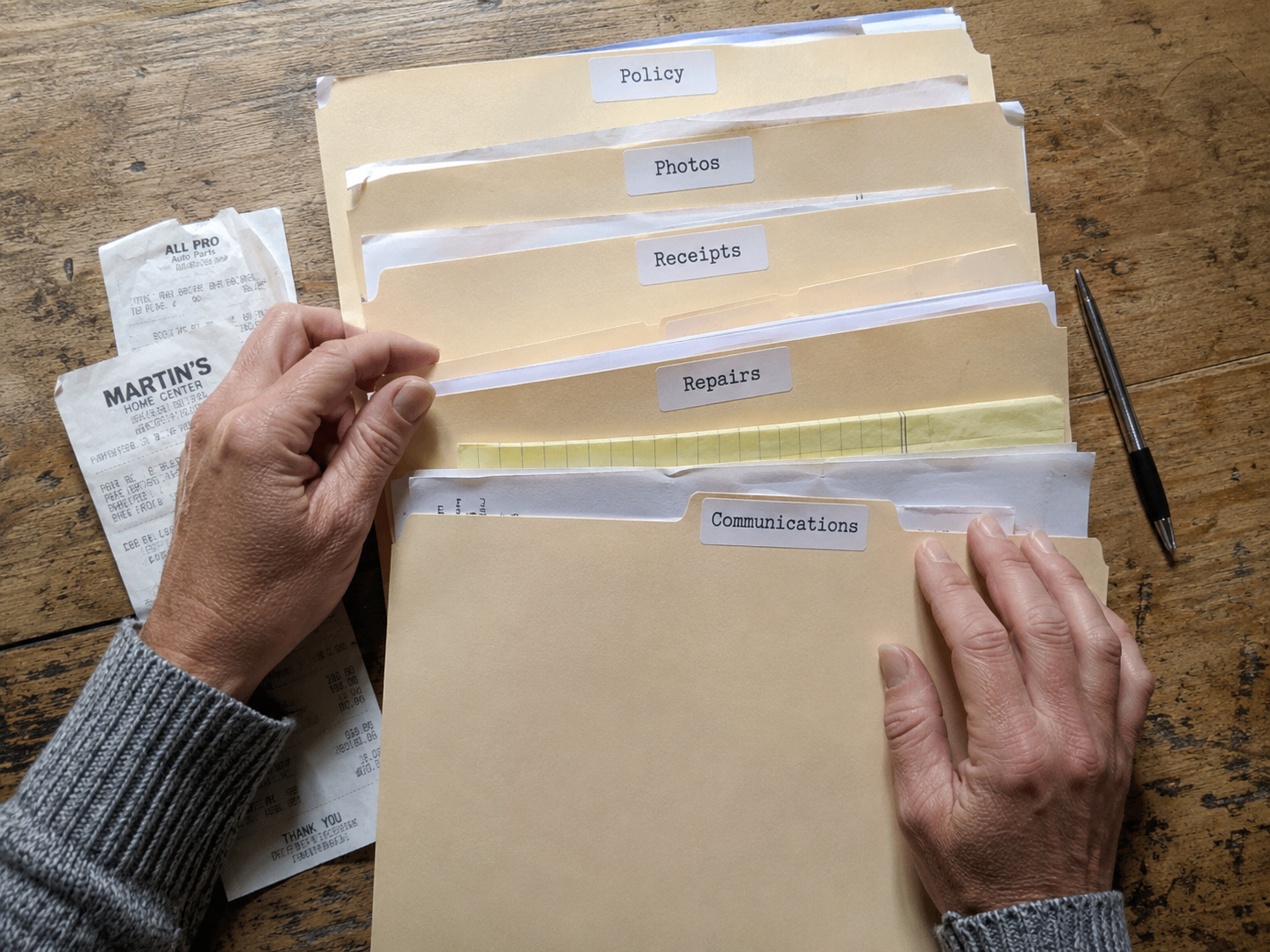
4. Open Your Claim File
Get organized today. Start a folder (digital or physical) that contains:
- The police report number
- All your photos, named clearly
- A spreadsheet with: date, who you talked to, what was said, what was promised
- Every receipt - medical, prescriptions, transportation, parking, towing, rental car, anything
- A daily plan journal - start today, write one paragraph per day.
This becomes your "evidence vault." Cases are won and lost on documentation, and the documentation begins now.
5. Do Not Give a Recorded Statement
This is the most important sentence in this article: do not give a recorded statement to any insurance company until you have spoken with an attorney.
Both insurers — yours AND the other driver's — will request recorded statements within 24-72 hours. They will frame it as routine, helpful, "to process your claim faster." Every word will be transcribed and analyzed by a defense team whose job is to reduce your payout.
The right answer is:
"I'd like to consult with an attorney before providing a recorded statement."
You are within your legal rights to wait. Your insurance carrier cannot deny your claim for waiting a few days to consult counsel.
The first week
The first week is when you build the case that will determine your settlement amount months from now.
1. Request the Police Report
Police reports take 5-10 business days to be released. Some departments require an online request; others want you to come in person.
Get a copy. Read it carefully. If anything is wrong — a misspelled name, an incorrect direction of travel, a missing witness — you can request a correction in writing. Inaccurate police reports come back to bite you in litigation
2.Get the Full "Policy Jaacket" of Your Auto Insurance
Most people only have the declarations page ("dec page") — a one-page summary of coverage limits. That's not your policy. That's a marketing document.
Request the full policy jacket in writing. It can be 80-150 pages and contains:
- The actual definitions of coverage
- The conditions and exclusions
- The procedures for filing
- Your uninsured/underinsured motorist (UM/UIM) coverage details - critical if the other driver is uninsured.
You cannot make informed decisions without the full document. Insurers count on you not asking.
3. Track Symptoms Daily
Whether you feel "fine" or not, start a daily log. One paragraph per day. Note:
- Pain levels (1-10) for any area that hurts
- Sleep quality
- Energy and focus during the day
- Any missed work, missed activities, memory issues, mood changes (concussion symptoms often emerge in week 2)
This log becomes one of the most powerful pieces of evidence in your case. Insurance defense attorneys cannot dispute documented daily symptoms — and juries respond strongly to consistent contemporaneous records.
5. Consult an Attorney - Before You Settle Anything
The single biggest mistake people make: settling too early.
Insurance companies offer fast settlements specifically because they know your full damages haven't manifested yet. They'll dangle $5,000 hoping you'll sign before you realize your back injury requires surgery, or your concussion is causing lasting cognitive issues.
A consultation with a personal injury attorney costs nothing. Most personal injury firms (ours included) work on contingency — no fees unless we win. There is literally no downside to making the call.


.png)