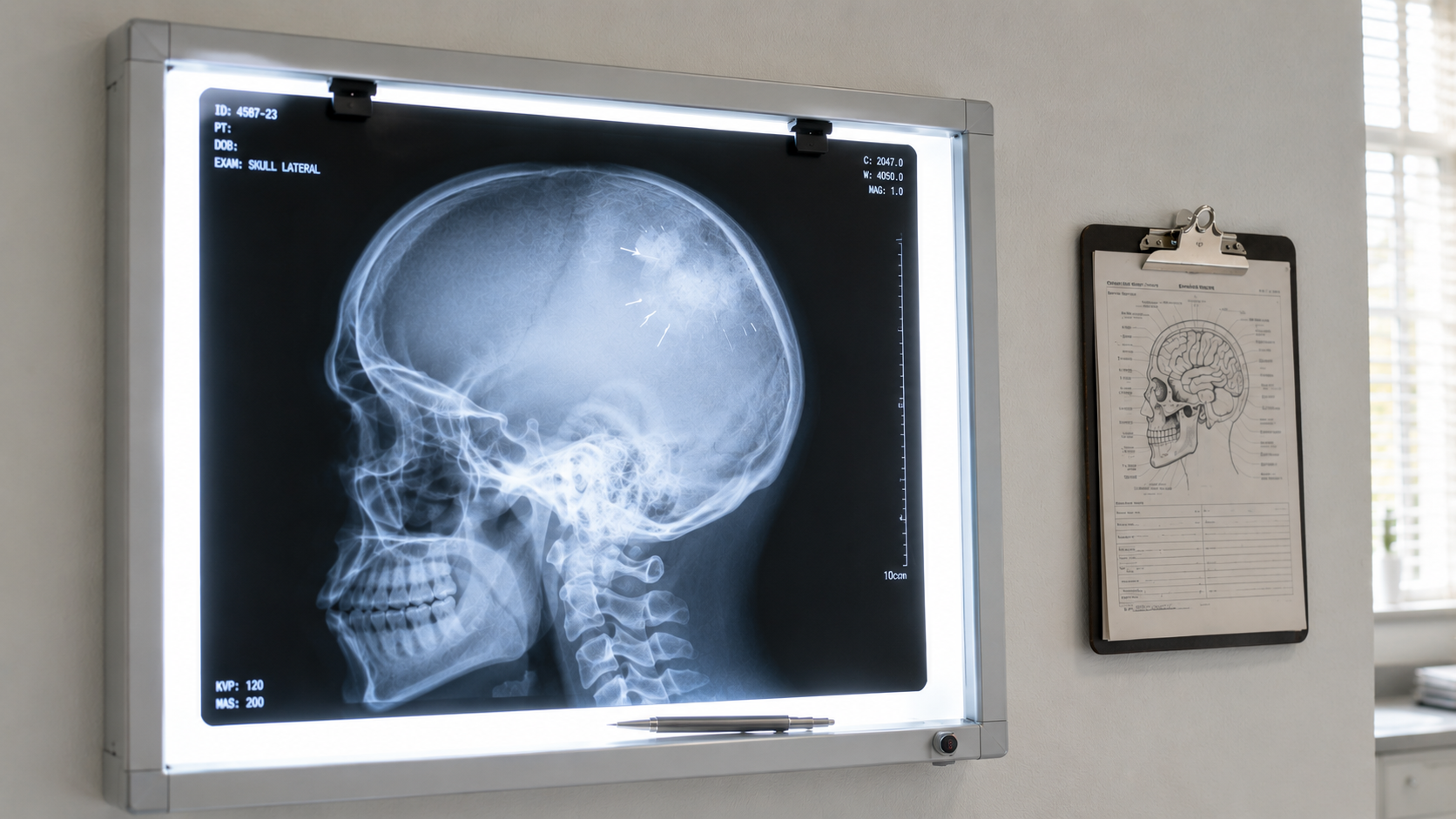







A 27-year-old construction worker is rear-ended on his way home from work. He hits his head against the side window. The hospital calls it a "minor concussion" and sends him home with a discharge sheet recommending rest.
Eleven days later, still fighting headaches and brain fog, he returns to the job site because his boss says the project can't wait. Two hours into his shift, a coworker brushes against him in a narrow corridor. He stumbles, his head bumps against a metal beam — softly, by any normal measure.
He is dead by the time the ambulance arrives.
This is Second Impact Syndrome (SIS). It is one of the most catastrophic and least understood phenomena in brain injury medicine. And it is one of the most aggressively denied claims in California personal injury law.
Every concussion victim is at risk for it. Almost none of them are warned about it. And when it happens — or even when it nearly happens — insurance companies fight to keep it out of the case.
what second impact syndrome actually is
The brain that has recently sustained a concussion is not a normal brain. It is metabolically depleted, vulnerable, and in a temporary state of impaired auto-regulation — the system that controls blood flow and pressure inside the skull.
If a second impact occurs during this vulnerable window — typically days to weeks after the first — the brain can lose its ability to regulate intracranial pressure. Blood vessels dilate uncontrollably. The brain swells against the skull. Pressure rises catastrophically. In severe cases, it kills within minutes.
The second impact does not have to be severe. It can be a fall, a fender bender, a sports collision, even a sudden whiplash motion without a direct head strike. The first concussion has already done the damage. The second event simply pushes the brain past its compromised ability to compensate.
Most documented Second Impact Syndrome cases involve teenage athletes returning to play too soon. But the medical phenomenon applies to every concussion victim — including the rear-ended commuter, the slip-and-fall plaintiff, the construction worker, the pedestrian who didn't lose consciousness.
The window of vulnerability is real. The medical literature is unambiguous. And insurance companies have spent years training their adjusters to act as if it isn't.
why this matters for your case
Second Impact Syndrome — and the broader risk of cumulative concussion injury — changes the legal value of a TBI case in two specific ways.
- It increases the duty owed to you. When a defendant causes the first concussion, they are responsible not only for the direct damage but for foreseeable consequences during recovery. A brain still healing from concussion is a "thin skull" plaintiff — a recognized doctrine in California personal injury law that says the defendant takes the victim as they find them. If the second impact causes catastrophic injury because the first concussion left the brain vulnerable, the original defendant is on the hook for those damages too.
- It dramatically raises the value of damages even without a second impact. A properly built TBI case documents not just the current injury but the elevated risk of permanent disability or death the victim now carries for life. That risk has financial value. Insurance adjusters do not volunteer this. Plaintiffs who do not raise it leave significant money on the table.
How insurance companies try to erase the risk
The insurance industry knows Second Impact Syndrome is a real phenomenon. It has been documented in peer-reviewed medical literature since the 1980s. There are clinical guidelines. There are sports medicine protocols. There is no scientific dispute about its existence.
But in the claims context, the playbook works like this:
- "That was a separate incident." When a second impact occurs, the insurer argues it has nothing to do with the first crash. Your client was healed. Whatever happened in the second event is a separate problem with a separate cause. The fact that the first concussion created the vulnerability is treated as legally irrelevant.
- "There's no documented connection." Many concussion victims are never formally told they're at elevated risk for SIS. So when symptoms or a second event occurs, there's no medical record explicitly linking it to the first crash. The insurance company exploits that documentation gap to deny causation.
- "That's a sports medicine concept." Adjusters and defense attorneys argue that SIS is only relevant for football players and boxers, not for car accident victims or pedestrians. The medical literature does not support this distinction. Brain biology doesn't care how the first concussion happened.
- "Your client wasn't supposed to be doing X." If the second impact occurred during normal life — work, parenting, driving — the insurer argues the victim should have been more careful, more aware, more cautious during recovery. The fault gets shifted to the patient.
Each of these arguments has the same goal: separate the second injury from the first, so the insurer pays only for the initial concussion as if recovery were guaranteed.
what has to be in the medical record
A TBI case that properly accounts for Second Impact Syndrome risk requires specific medical documentation. Most concussion patients don't have it because nobody told them to ask for it.
The record needs to include:
A formal diagnosis of concussion or mTBI from a qualified provider — not just an ER discharge note.
A documented neurological follow-up plan that explicitly addresses return-to-activity restrictions during the recovery window.
Specific written warnings about the elevated risk of catastrophic injury from a second impact during recovery — and the patient's acknowledgment of those warnings.
A baseline neurocognitive assessment, ideally before return to work, driving, or athletic activity.
Documentation of any post-concussion symptoms that persist past the initial recovery window, which establishes ongoing vulnerability.
When this documentation exists, the case for elevated damages becomes a documented medical reality rather than an attorney's argument. When it doesn't exist, the case becomes much harder to value correctly.
The lifetime risk you carry now
Even patients who fully recover from a single concussion carry measurable elevated risk for the rest of their lives. Studies show that prior concussion is associated with:
Higher risk of subsequent concussions from impacts that would not have caused one before.
Longer recovery times for any future head impact.
Increased risk of chronic traumatic encephalopathy (CTE) and other progressive neurological conditions when multiple concussions accumulate.
Elevated risk of dementia, depression, and cognitive decline later in life.
This is what defense lawyers and insurance adjusters mean when they say "but you recovered." The recovery is partial. The vulnerability persists. The law allows you to be compensated for the future risk you now carry — but only if the case is built to document it.
the bottom line
A concussion is not a closed event. It opens a window during which any second impact can become catastrophic. It permanently elevates your risk for everything that follows.
Insurance companies are counting on you to think of your concussion as a one-time injury that "healed." The medical reality, the legal doctrine, and the value of your case all depend on understanding it differently.
If you've had a concussion — whether you experienced a second impact or not — your case may be worth significantly more than the first offer suggests. Find out before you accept anything.