




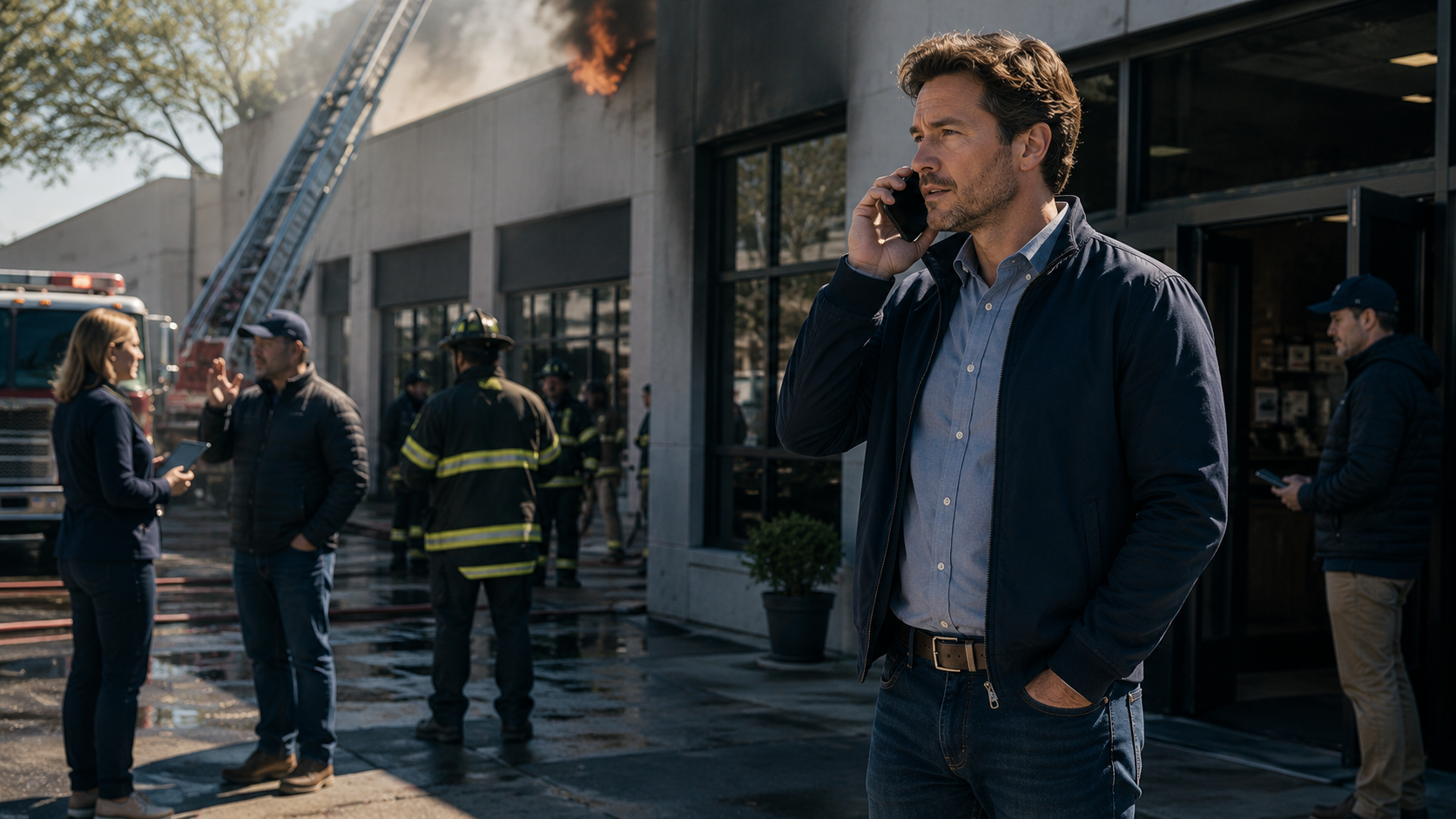
A commercial fire is not just a property loss; it is a threat to your company's existence. While you are focused on reopening, your insurer is looking for ways to classify your "Business Interruption" as an uncovered market fluctuation or a pre-existing financial downturn. To protect your business, you must treat your claim as a Financial Audit.
THE "BUSINESS INTERRUPTION" (BI) TRAP
The insurer will ask for your tax returns and P&L statements.
- The Trap: They will use "historical averages" to suggest your business would have been down anyway, even without the fire. They may try to exclude "Extra Expenses" incurred to keep your business running at a temporary location.
- The Action: Create a "Fire-Impact Ledger" immediately. Track every client you lose, every order you cannot fill, and every "Extra Expense" (temporary rent, expedited shipping, emergency payroll) required to mitigate the loss.
EQUIPMENT RECOVERY VS. REPLACEMENT
Commercial grade machinery, servers, and specialized inventory are often sensitive to heat and microscopic soot.
- The Trap: Insurers often push for "professional cleaning" of high-end equipment.
- The Action: Demand an inspection by a certified manufacturer's technician, not the insurance company's generalist adjuster. If a cleaning voids your warranty, the equipment must be considered a "Total Loss." Accepting a "cleaning" today could lead to a catastrophic mechanical failure six months from now—long after the claim is closed.
THE "CODE UPGRADE" DISPUTE
If your commercial building is older, rebuilding it to current California fire and safety codes will cost significantly more than the original structure.
- The Action: Check your policy for "Ordinance or Law" coverage. Many insurers "forget" to mention this coverage exists, leaving you to pay the difference for mandatory ADA or fire-sprinkler upgrades out of pocket.
PROTECT YOUR "KEY EMPLOYEES"
Losing your staff during a shutdown is often the final blow to a business.
- The Action: Many commercial policies include coverage for "Ordinary Wages." Use this to keep your key staff on payroll while you rebuild. If the insurer denies this, they are effectively forcing your business into permanent closure—a hallmark of Bad Faith behavior.
THE ATTORNEY'S VERDICT
In commercial fire claims, insurers bet on the fact that you are too busy managing a crisis to audit their math. We don't let them get away with it. We ensure that "Business Interruption" covers your actual loss, not their "projected" minimums.


.png)