





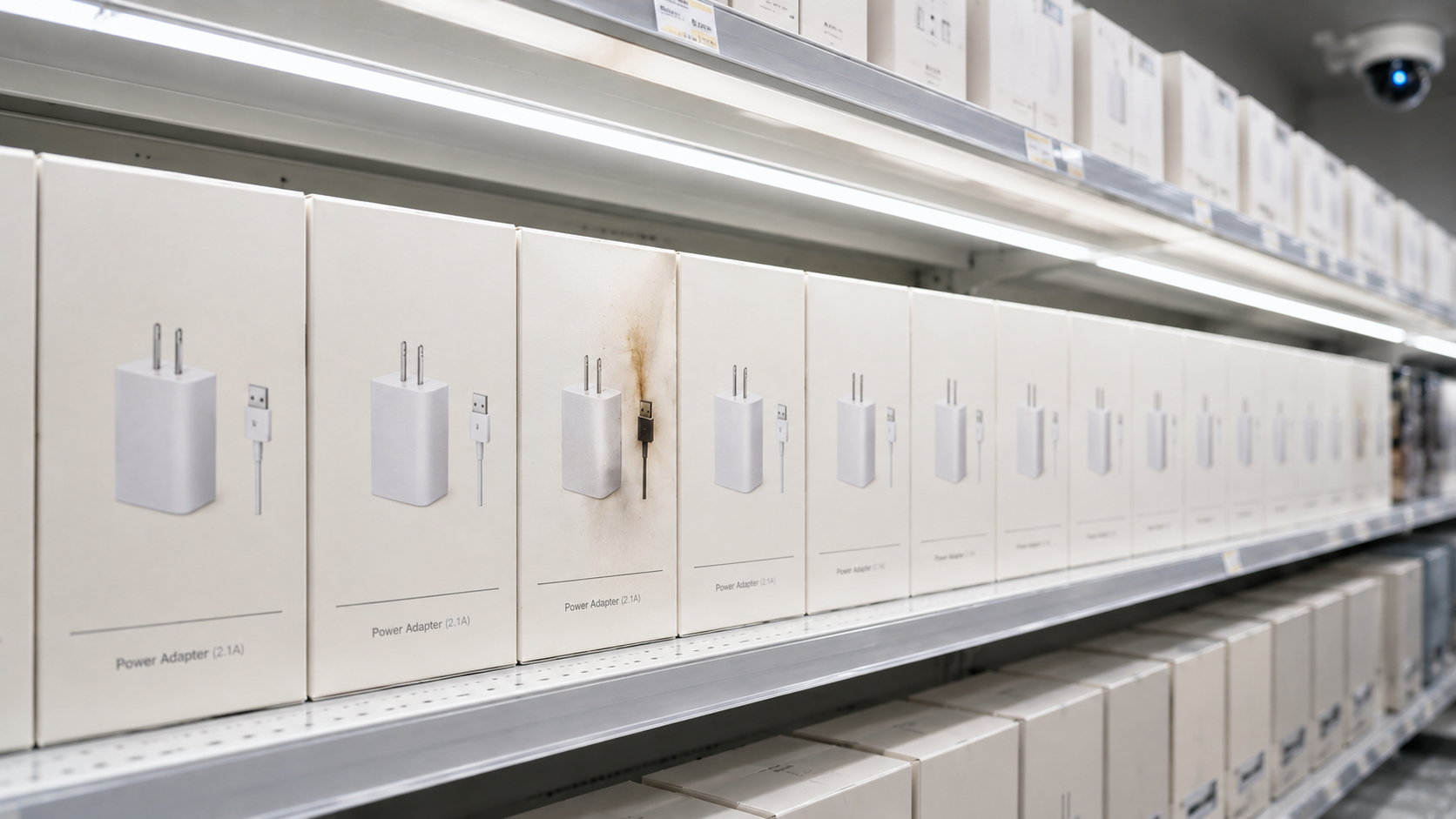
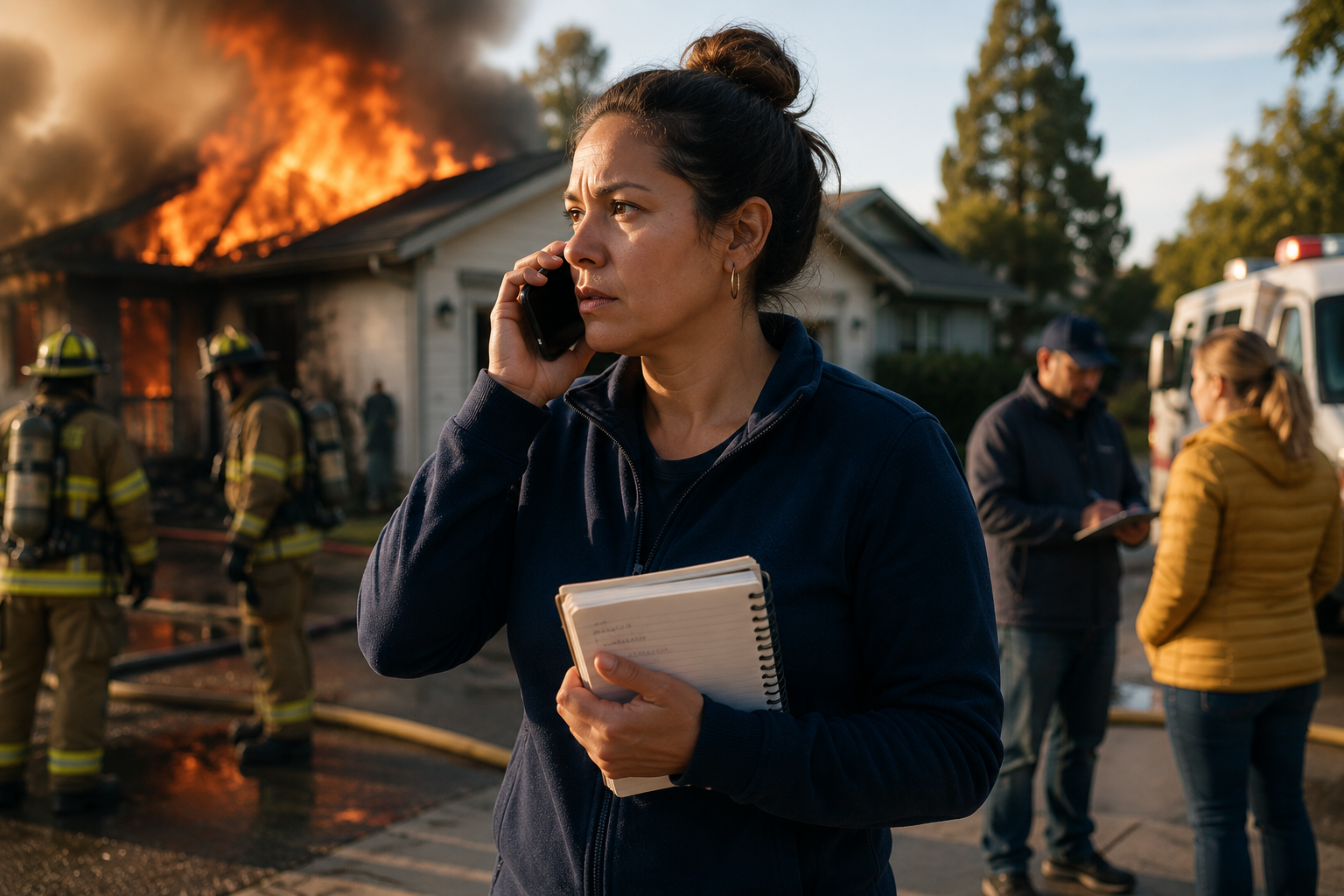
A space heater catches fire in a Los Angeles home. The fire spreads. A family loses everything. The mother is hospitalized with severe burns.
When she contacts the manufacturer's insurance company, an adjuster takes the call. The adjuster is friendly. He asks a familiar series of questions: "Was the heater being used correctly?" "Was anything blocking the vents?" "Had it been moved recently?" "Was it plugged into a properly grounded outlet?"
Every question is designed to do one thing: shift the conversation from the heater was defective to the user did something wrong. Because if the user did something wrong, the manufacturer escapes liability. And if it becomes a contest of who was more careful, the case becomes a regular negligence claim that the manufacturer's insurance company can fight indefinitely.
There is just one problem with this approach. California product injury law does not work that way.
You do not have to prove the manufacturer was careless. You do not have to prove they were negligent. You do not have to prove they "did something wrong" in any traditional sense. You only have to prove that the product was defective and that the defect caused your injury. That is the rule of strict liability, and it is the most powerful tool in California injury law.
Most product injury victims never hear those words from the insurance adjuster on the other end of the line.
WHAT STRICT LIABILITY ACTUALLY MEANS
Strict liability is a legal doctrine that holds manufacturers — and everyone else in the chain of distribution — responsible for injuries caused by their defective products, regardless of whether they acted carelessly.
Under ordinary negligence law, the injured person has to prove that the defendant:
- Owed them a duty
- Breached that duty
- Caused the injury
- With actual damages
Under strict liability for product defects, the injured person only has to prove:
- The product was defective
- The defect existed when it left the manufacturer
- The defect caused the injury
The defendant's care or carelessness is not part of the case. A manufacturer that exercised extreme care can still be liable. A manufacturer that "did everything right" can still be liable. The question is whether the product itself was unreasonably dangerous when sold, not whether the people who made it were careful.
California adopted strict liability for product defects in 1963 in Greenman v. Yuba Power Products. The doctrine has expanded steadily ever since. Today, California is widely regarded as the most favorable state in the country for product injury plaintiffs.
THE THREE TYPES OF DEFECTS
Strict liability applies to three distinct kinds of product defects. A claim usually involves one of them — sometimes more than one.
Design defects
The product itself is dangerous because of how it was designed, even if every unit was manufactured exactly to spec. Examples: a vehicle that rolls over because its center of gravity is too high, a medication with a formulation that causes predictable harm, a tool with a guard placement that leaves users exposed.
In a design defect case, every single unit of the product is defective. The fault is in the blueprint, not in any one manufacturing run.
Manufacturing defects
The design is fine, but this particular unit — or this particular production batch — was made incorrectly. A bolt was missing. A weld was cold. A component was substituted for a cheaper part. The product that injured you was not the product the manufacturer intended to sell, but a defective version of it.
Manufacturing defects are often the easiest to prove because the product itself is the evidence — examined and compared to the intended design, the variance becomes obvious.
Warning defects (failure to warn)
The product is dangerous in some way that consumers cannot reasonably anticipate, and the manufacturer failed to provide adequate warnings or instructions. The classic example is a medication that has known side effects but the warning label is incomplete or misleading.
Warning defect cases often hinge on what the manufacturer knew (or should have known) at the time the product was sold, and what an ordinary consumer would have understood from the warnings provided.
THE TWO TESTS CALIFORNIA USES
For design defect cases specifically, California courts apply two alternative tests. A plaintiff can win on either one.
The Consumer Expectation Test
If the product failed in a way that an ordinary consumer would not have expected when using it in a foreseeable manner, the product is defective. No technical engineering analysis required. The standard is what a reasonable user would think — not what the manufacturer's experts say.
This test favors plaintiffs because juries can apply it intuitively. A toaster that explodes during normal use, a chair that collapses, a phone charger that catches fire — these violate consumer expectations on their face.
The Risk-Benefit Test
If the design's inherent risks outweigh its benefits, the product is defective. This test brings in expert analysis: could the product have been made safer at reasonable cost? Were alternative designs available? Was the product's utility worth the danger?
Importantly, under California's risk-benefit test, once the plaintiff shows that the design caused the injury, the burden shifts to the manufacturer to prove the design's benefits outweighed its risks. This is the most plaintiff-favorable burden allocation in any state.
HOW MANUFACTURERS TRY TO REINSERT FAULT
Once you understand strict liability, the manufacturer's defense playbook becomes transparent. Every question they ask is an attempt to convert the case back into a negligence framework — where the burden is on you to prove they did something wrong.
Listen for the patterns:
"Were you using the product correctly?" Translation: We want you to admit to product misuse, which is one of the few defenses to strict liability.
"Did you read the instructions?" Translation: We want to shift this to a failure-to-warn analysis where we control the variables.
"Had you modified the product in any way?" Translation: We want to argue substantial modification, which can defeat strict liability.
"Was the product still under warranty?" Translation: Warranty and strict liability are completely separate legal frameworks. We are hoping you do not know that.
"Did anyone tell you the product was unsafe?" Translation: We are looking for assumption-of-risk defenses.
Each question converts the case from "was the product defective" to "did the user do something wrong." Strict liability prevents this conversion, but only if the victim's attorney knows to keep the case framed correctly from the first phone call.
THE WHOLE CHAIN IS LIABLE
There is one more piece of California strict liability that catches manufacturers off guard.
The rule does not apply only to the manufacturer. It applies to everyone in the chain of distribution — the manufacturer, the wholesaler, the distributor, and the retailer. Every party that placed the defective product into the stream of commerce can be held strictly liable.
This matters enormously when the manufacturer is overseas, defunct, undercapitalized, or impossible to serve with process. The case is not over. The retailer that sold you the product, the distributor that supplied them, the wholesaler that imported it — all are potential defendants. Each has its own insurance. Each has its own assets.
For products manufactured outside the United States, the chain-of-distribution rule is often the difference between a recoverable case and one that dies on the courthouse steps.
THE BOTTOM LINE
If you were seriously injured by a defective product in California, the most important fact about your case is not what the manufacturer did or didn't do. It is what the product did to you.
Under California strict liability, the burden is on the manufacturer to defend its product — not on you to prove they were careless. Every adjuster question that tries to make you defend your own behavior is an attempt to evade that burden. Every settlement offer based on "shared responsibility" reflects a case being priced under the wrong legal framework.
California product injury law is the strongest in the country. The only thing standing between you and that strength is whether your case is being handled by someone who knows to insist on it.

.png)