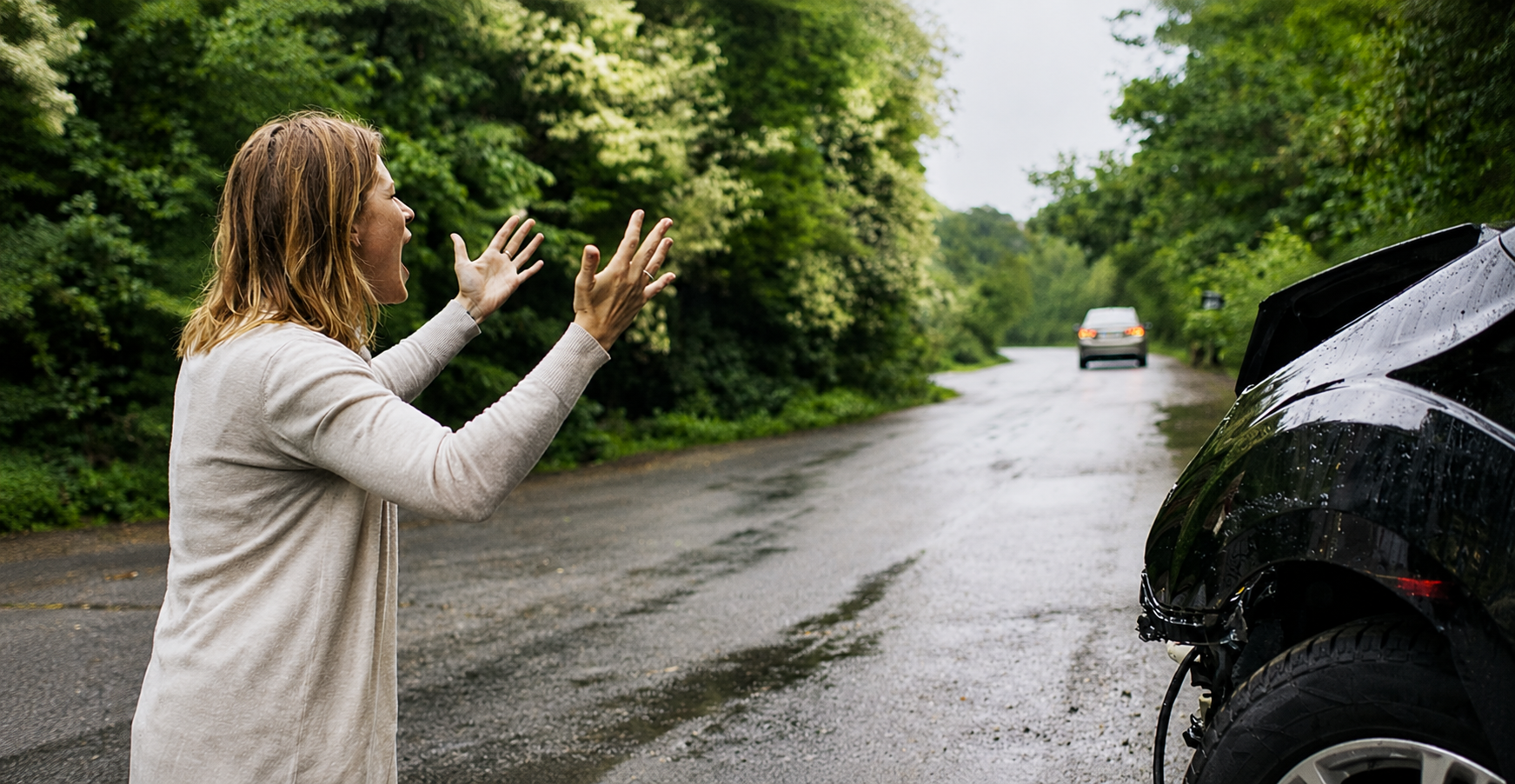
UM/UIM claims have a unique twist — you're now negotiating against the company that takes your premium every month.
The "Sudden Stranger" Treatment: The carrier you've paid for years now treats your claim like any third-party lawsuit. The friendly agent disappears. The adjuster's job is to minimize what they owe you.
The "Comparative Fault" Pivot: They will look for any way to assign blame to you — even when an uninsured driver clearly caused the crash. Any percentage of fault attributed to you reduces what they pay.
The "Pre-Existing Condition" Search: They will dig through your medical history to argue your injuries existed before the accident. Their goal is to disconnect the crash from your damages.
UM vs UIM - Knowing What You're Covered For
These two coverages get confused constantly. The distinction matters when calculating your case value.
Uninsured Motorist (UM): Applies when the at-fault driver has NO liability insurance. Your UM coverage pays your injuries up to the policy limit, as if you were suing the at-fault driver directly.
Underinsured Motorist (UIM): Applies when the at-fault driver has insurance — but not enough to cover your damages. UIM picks up the difference, up to your own policy limits.
UM Property Damage (UMPD): A separate coverage that may apply to vehicle damage when the at-fault driver has no insurance. Often confused with collision coverage.
Phantom Driver Coverage: When a hit-and-run driver causes injuries without ever making contact (you swerved to avoid them and crashed), some UM policies still respond. Requires immediate police report and corroborating witnesses.
Stacking Multiple Policies: Households with multiple vehicles may be able to combine UM/UIM coverage across policies. California permits some stacking — and we know how to navigate the rules.
The Statutory Minimum Trap: California's minimum liability is just $15,000 per person / $30,000 per accident — woefully inadequate for serious injuries. Even a "fully insured" driver may be effectively underinsured for your case.
Hit-and-Run Finding the Driver Who Ran
Fleeing the scene is criminal. It is also evidence of guilt. We work with investigators to identify the driver — and build your case when they can't be found.
The Police Report Is Your Lifeline: You must report a hit-and-run to law enforcement promptly (typically within 24 hours). The report triggers your UM coverage and starts the criminal investigation. Without it, both can be denied.
Surveillance & Eyewitness Hunt: Most California businesses, ATMs, traffic cameras, and residential doorbells have footage. We canvass the area immediately because most surveillance overwrites within days. A license plate or even a partial plate is often enough.
The "Witness Continuum": Drivers don't run from quiet streets. There were almost always witnesses. We find them, interview them, and lock down their accounts before memories fade.
When the Driver Isn't Found: UM/UIM coverage still applies to hit-and-run cases when you report quickly and meet your carrier's requirements. We make sure the procedural box-checking happens correctly so coverage isn't denied on a technicality.
When the at-fault driver dissapears, your insured should appear. We make sure they do.